
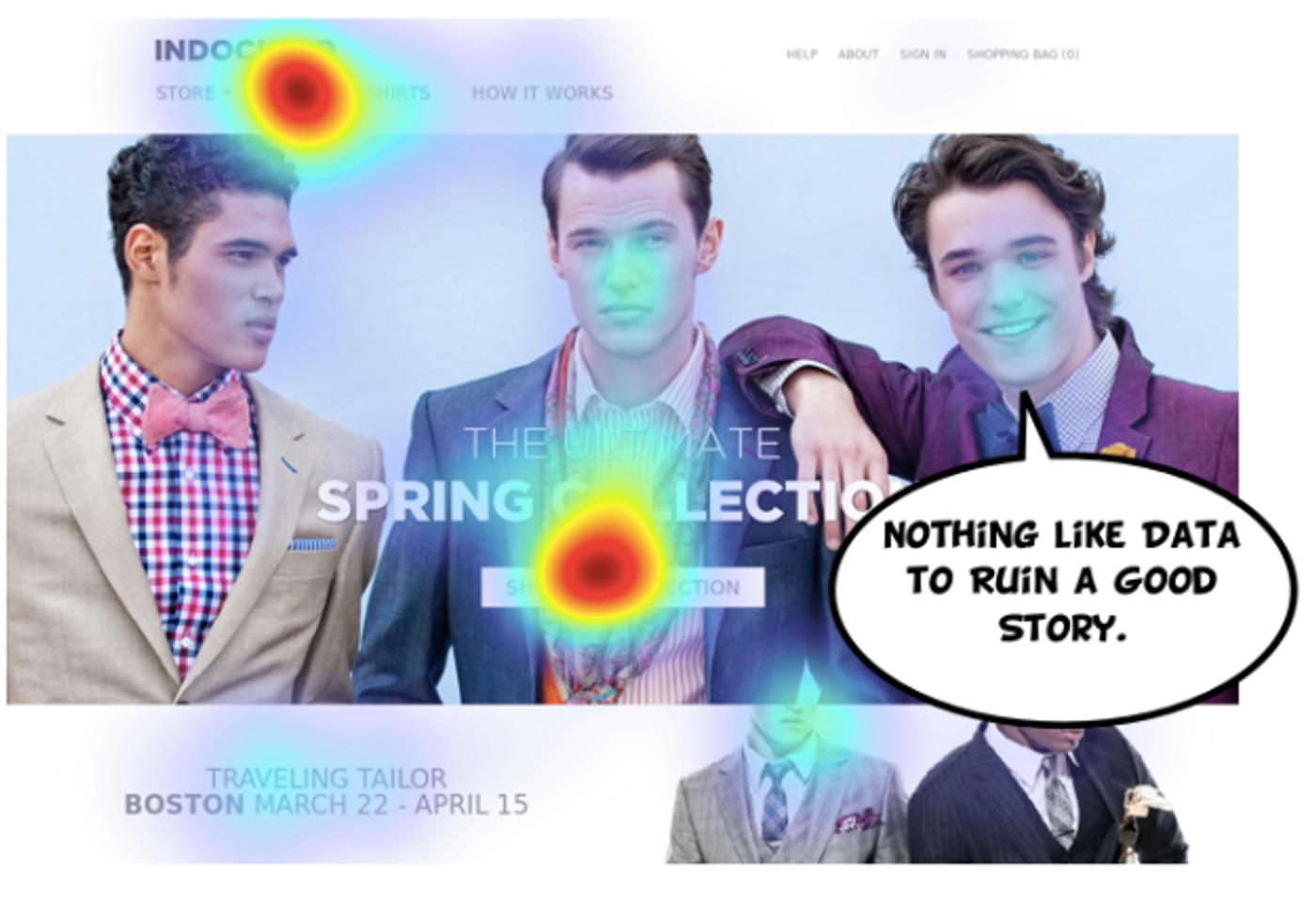
METHOD: We're looking at data from one of our recent eye-tracking studies with 46 subjects who were purchasing products on 200 AdWords eCommerce pages. We recorded 261,150 fixations in total and users were looking at each webpage for 15 sec (+/- 6 sec) on average. The study was conducted in the Neurobiopsychology Lab at the University of Osnabrueck, Germany.
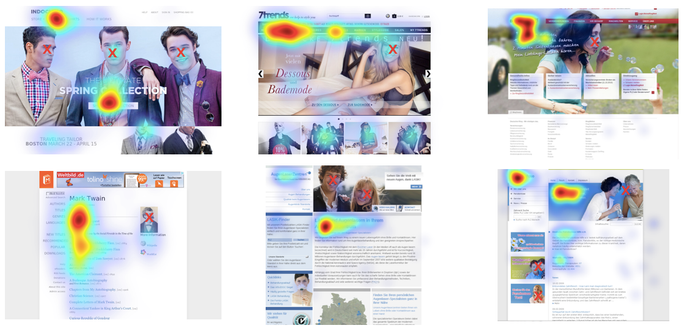
Myth #1: "Faces always & instantly draw attention."
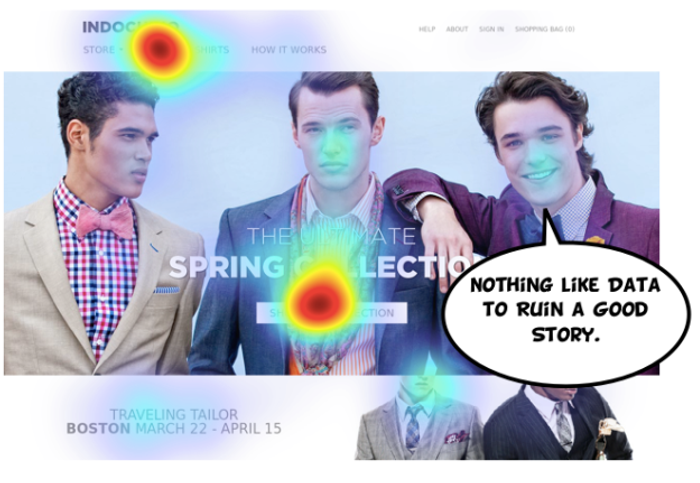
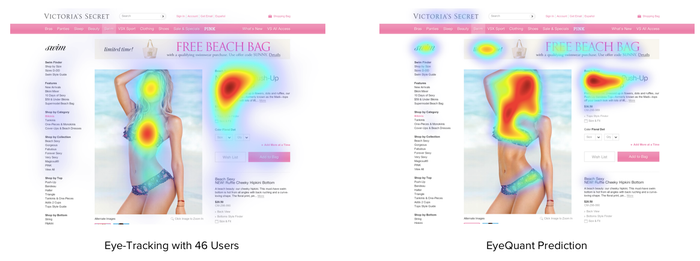
This is probably one of the most universal design assumptions about human attention you'll find on the internet: "as humans, we're naturally wired to always seek out and look at any available faces first."
Roughly correct – except for when it isn't. The truth is that as humans we do really like faces. We'll look at them sometimes. We probably even have a dedicated brain area involved in processing faces. However, we look at them much less often than you would typically believe.
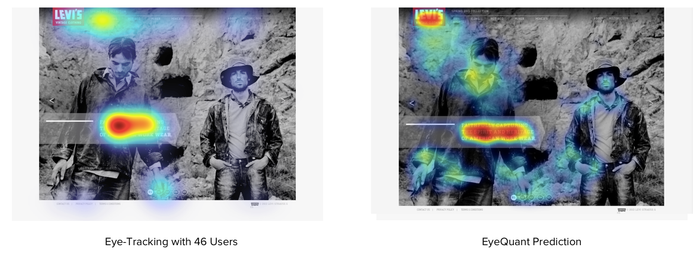
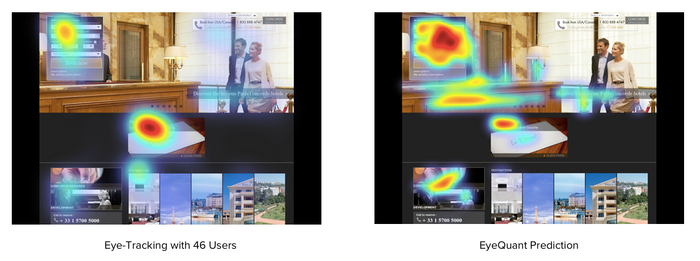
Our careful, explorative hypothesis is this: looking at a face does provide a sort of emotional buzz, so we may remember looking at them more than we do remember looking at other things. This might lead to wrong conclusions about general viewing behaviour.
Watercooler conclusion: "Faces are emotionally powerful, but they don't always attract as much attention as we think they do."
Myth #2: Large text instantly draws a lot of attention.
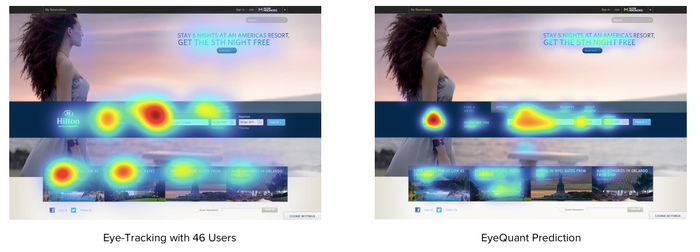
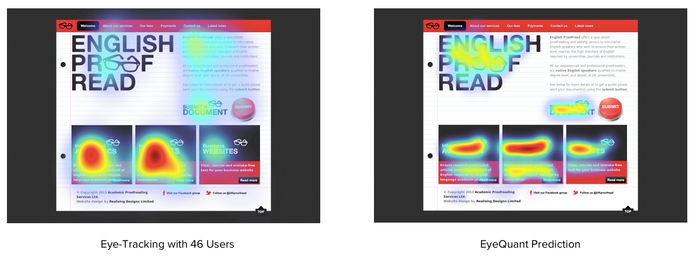
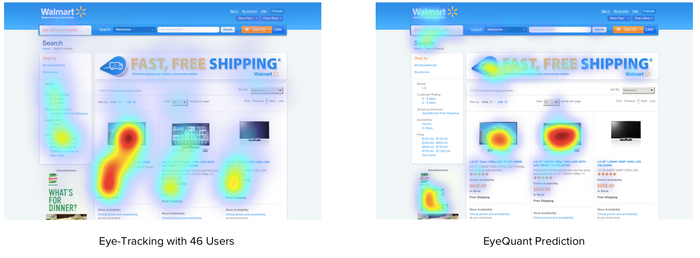
"Large text is a great way to attract user attention" is another rather popular idea about how attention works online. However, our data shows that it usually doesn't work. In a lot of cases big fonts even seem to have a negative effect on attracting attention.
Our careful, explorative hypothesis is this: there may be an element of "banner blindness" involved. At the same time, extremely large letters might be less readable for the human eye as well.
Watercooler conclusion: "Big typography is visually loud, but not at all a safe way to grab user attention. We need to look into other ways as well."
Myth #3: "The magical word 'FREE' always pops out."
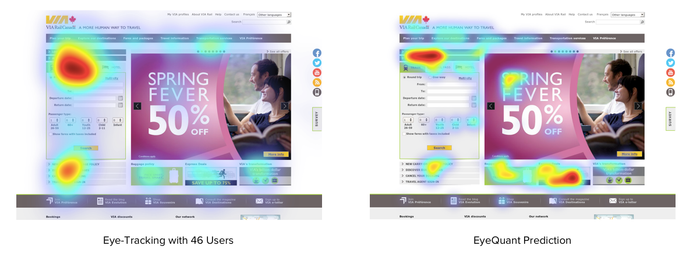
It's true: economically, nothing beats 'FREE'. But does this also mean that the word pops out to users immediately when they're visiting a page? Our data says otherwise.
Watercooler conclusion: "'Free' is a powerful semantical tool. We shouldn't rely on it as our main attention grabber though!"
Conclusions: don't rely on rules of thumb
Rules of thumb are fun. They're simple. And the more complex the thing is they're trying to explain the more appealing they become. Alas, that's also where they often fail – and visual attention is a rather complex, extremely context-driven system that cannot be captured in a set of simple rules.
What we're doing at EyeQuant is to combine large amounts of data like the study above in lightning-fast computer models. Testing always beats guessing.