
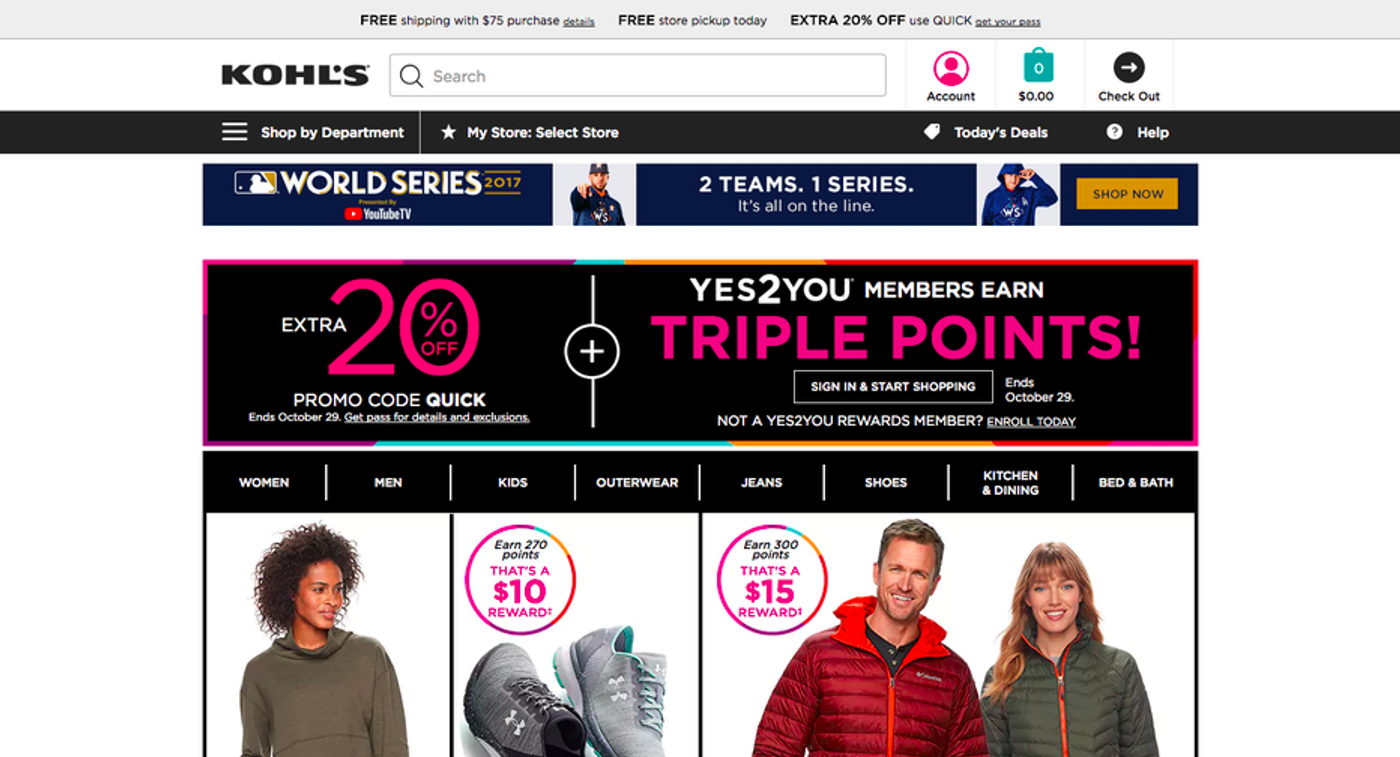
This isn't only based on professionals' opinions and experiences either, but is also backed up by hard data. For example, we ran a study on 300 top websites from different industries and found that there's a clear relationship between how clean a design is and how well it keeps users on a site. Specifically, we found that cluttered designs lead to higher bounce rates across all industries.
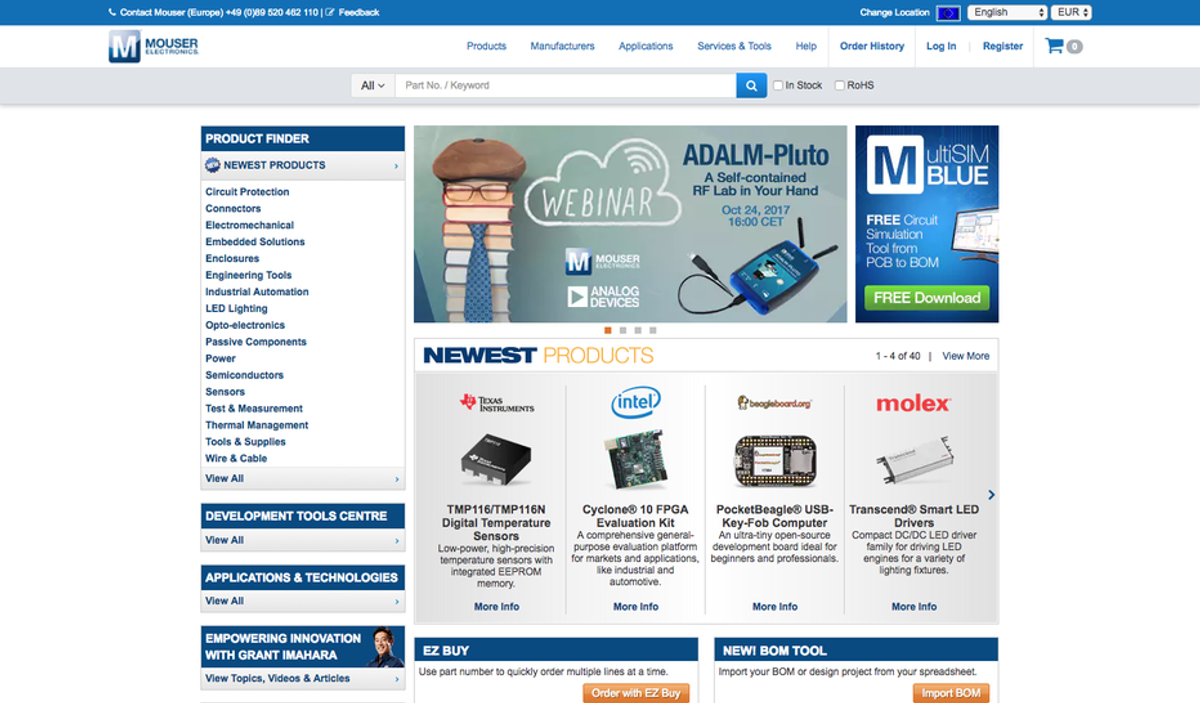
Clutter leads to increased cognitive load
Cognitive load is a measure that describes how much mental effort is required to fulfill a certain task. If a page is full of content (promotions, banners, blocks of text, CTAs, etc.) the user will immediately become overwhelmed. Cognitive load spikes and leads to confusion rather than a streamlined experience.
Today's users are spoiled in terms of UX. They don't put up with sites that look like they came straight from the 2000s anymore.
Clutter disturbs the attention budget
The second reason why clutter decreases user engagement is that users aren't immediately compelled to engage with you rather than a competitor. Think about it this way: the more content you present on a page, the more is competing for your users' attention. Attention however is a limited budget that needs to be spent wisely.
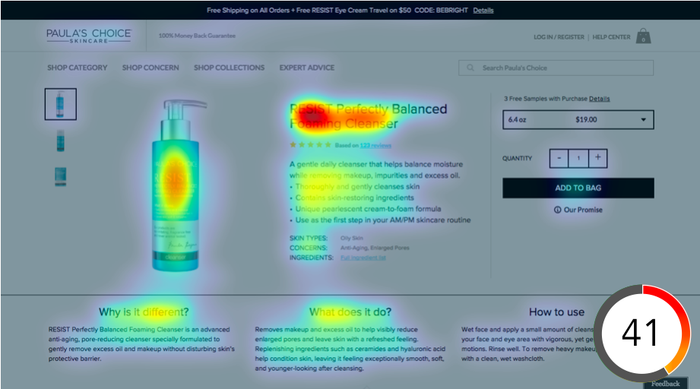
We ran a design by Paula's Choice through EyeQuant to see how cluttered this design appears to users and which areas stand out most visually. Notice how attention is quite distributed across the page. The clarity score (41/100) indicates how users would rate this site in terms of clarity or clutter.
Designers have two essential tools at their disposal to lead users' eyes to key content:
- They can design in a way that the most important elements have the highest saliency.
- They can reduce the amount of design elements on the page to lessen the competition amongst them.
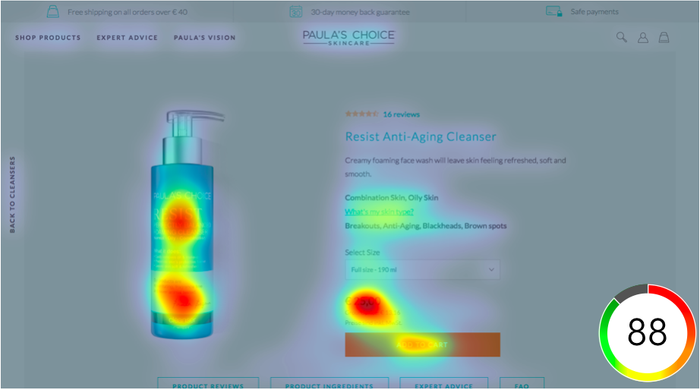
On Paula's Choice's European site, attention is much more focused. Since it doesn't contain any distracting elements (clarity score of 88/100) it centers around two key areas: the product image and the price / CTA.
Key Takeaways
- Clutter on webpages decreases user engagement.
- Cluttered web pages lead to higher amounts of cognitive load.
- Decreasing the amount of content makes it more likely that key content stands out.